
Glaciers, wildlife, and wilderness — the trip you can only take from May to September.
Alaska isn’t a typical cruise destination. There’s no warm-weather port-shopping circuit, no all-night casino energy, no Broadway show on Deck 7 most evenings. It’s the opposite — a short season, a dramatic landscape, and a coastline so vast you can only really experience it from the water.
A cruise is genuinely the best way to see Alaska. The fjords, calving glaciers, and remote ports of the Inside Passage are connected by water, not road — so you wake up somewhere new each morning without booking internal flights or driving long stretches. The bigger question isn’t whether to cruise Alaska. It’s whether you want to see Alaska’s coastline or Alaska itself. The answer changes everything about your itinerary — and is the reason most of my Alaska clients pair their cruise with a land tour.
Three things make an Alaska cruise unlike any other trip you’ll take. Each on its own would be reason enough.
Glaciers Up Close
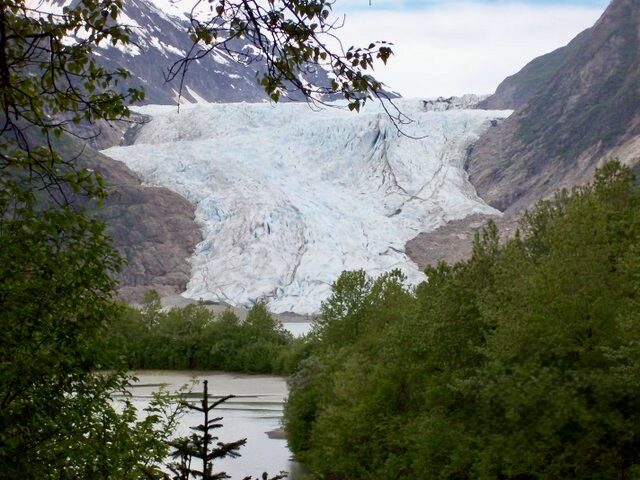
Tidewater glaciers calve into the sea while you watch from the ship. Hubbard, Margerie, Mendenhall, the wall of ice at Glacier Bay National Park. There is no equivalent experience in the Caribbean or the Mediterranean — only here.
Wildlife Without a Safari
Humpback whales breaching alongside the ship. Orcas in the Inside Passage. Bald eagles in every harbor. Brown bears at the salmon runs, sea otters in the kelp beds. Bring binoculars and you’ll use them every day.
Scenic Cruising as Itinerary
Most cruise itineraries are about the ports. In Alaska, the days between the ports are themselves the destination — slow drifts through Tracy Arm, Endicott Arm, the College Fjord, with mountains and forests sliding past your veranda.
The Alaska cruise season is short — roughly mid-May through mid-September. Within those five months, the trip you get changes significantly month by month.
Early Season
Lower prices, fewer ships in port, mountains still snow-capped. Wildlife is just emerging — bears coming out of hibernation, whales returning to feed. Some glacier excursions can be limited if ice hasn’t fully broken up, but the trade-off is solitude and dramatic snow-line scenery.
Best for: photographers, return cruisers, value-seekers, early-summer travelers.
Peak Season
The long daylight months — 16 to 19 hours of light a day, depending where you are. Warmest weather. Wildlife at its most active. Salmon runs and the bears that follow them. This is also the busiest and most expensive window, and sailings sell out a year ahead.
Best for: first-time Alaska cruisers, families on summer break, anyone wanting peak wildlife activity.
Late Season
Fall colors set the tundra alight. Northern Lights become visible again as the nights lengthen. Salmon spawning peaks and bears are at their most active. Prices drop, ships are fewer, and the season’s quieter beauty is genuinely special.
Best for: couples, return cruisers, photographers, Northern Lights chasers.
Alaska itineraries fall into two main shapes. The choice between them is the most important decision you’ll make for the trip.
Inside Passage
From Seattle or Vancouver, sailing the protected waters of the Inside Passage and returning to the same port. Visits the classic Alaska ports and one tidewater glacier (Tracy Arm or Glacier Bay). Easiest logistics — one flight in, one flight home.
Gulf of Alaska
Vancouver to Whittier or Seward (or reverse), heading deeper north into the Gulf. Adds Hubbard Glacier and the College Fjord. This is the route that pairs with a land tour — you disembark closer to Anchorage and continue overland into the interior.
Juneau (state capital, Mendenhall Glacier) · Skagway (Gold Rush history, White Pass & Yukon Route train) · Ketchikan (totem poles, salmon capital) · Sitka (Russian heritage) · Icy Strait Point (small port, deep wilderness) · Whittier or Seward (one-way endpoints near Anchorage)
The cruise sees Alaska’s coastline. The land tour sees Alaska.
A one-way cruise gives you something a round-trip can’t: access to Alaska’s interior. Once you disembark in Whittier or Seward, the Alaska Railroad’s glass-domed coaches take you deep into the wilderness — through forest, tundra, and views of Denali itself.
The Alaska Railroad’s signature dome cars carry you between Anchorage, Talkeetna, Denali, and Fairbanks. Floor-to-ceiling glass overhead, gourmet meals served at your seat, narration from local guides. No comparison to a tour bus — and you cover terrain you cannot reach any other way.
Two to three days here is the heart of the land tour. Lodge stays inside or near the park, guided wilderness tours into the backcountry, possible sightings of grizzly bear and caribou, and — weather permitting — the towering peak of Denali itself.
Anchorage (one-night base) → Talkeetna (frontier town, base for Denali climbers, scenic flightseeing option) → Denali National Park (2–3 nights at park-area lodges, full wilderness day) → Fairbanks (gold-rush history, Northern Lights from late August onward)
Most cruise lines bundle these as packaged “cruisetours” — but I find clients get a noticeably better trip when the cruise and land portions are booked separately, with hand-picked lodges and the right number of nights at each stop. This is where I add the most value on an Alaska trip.
Alaska is dominated by a handful of lines that have invested heavily in the region — owning lodges, rail cars, and land-tour infrastructure. The right line depends on the kind of trip you want once you step off the dock.
Princess Cruises
The deepest Alaska program of any cruise line — Princess owns its own rail cars, riverside lodges, and bus fleet, so a Princess cruisetour is seamless end-to-end. Star Princess brings a brand-new ship to the region, and their Plus and Premier packages bundle wifi, drinks, and gratuities.
Best for: first-time Alaska cruisers, families, travelers wanting a turnkey land-tour combo.
Holland America
The other major Alaska veteran, with its own lodges and rail equipment. Slightly more sophisticated onboard atmosphere than Princess, with a slightly older traveler skewing toward enrichment programming, Alaska-focused lecturers, and a quieter ship feel.
Best for: mature travelers, those who value onboard learning, repeat Alaska cruisers.
Celebrity Cruises
Modern-luxury ships in Alaska including the Edge-class with Infinite Verandas — retractable glass walls that turn your cabin into a balcony, ideal for watching glaciers slide by. The Retreat suites are essentially a private wing of the ship.
Best for: couples, modern-design lovers, premium without “old-school cruise” formality.
Norwegian Cruise Line
The largest fleet in Alaska. Casual onboard vibe with the most family-friendly programming. Freestyle dining means no fixed dinner times — flexible for families with mixed schedules. Good port coverage and a strong value proposition.
Best for: families, multi-generational groups, value-conscious first-timers.
Disney Cruise Line
Alaska is one of Disney’s most beloved itineraries — and for good reason. Disney’s signature character experiences and family programming paired with Alaska’s dramatic wilderness creates a trip that works on every level. Disney Wonder sails the Inside Passage from Vancouver, visiting Juneau, Skagway, Ketchikan, and Glacier Bay. Kids get the Disney magic; adults get Alaska.
Best for: families with children, multi-generational groups, Disney fans of any age.
Silversea & Seabourn
For the all-inclusive luxury experience. Smaller ships reach ports the big lines can’t — Petersburg, Wrangell, and remote glacier inlets where you might see one other ship all day. All-inclusive across drinks, dining, gratuities, and select shore experiences. The luxurious quiet of Alaska without a crowd.
Best for: luxury travelers, repeat cruisers, anyone who values uncommon ports and uncrowded experiences.
Ready to plan your Alaska trip? Let’s design it.
Cruise only or cruise plus land tour, early season or peak — tell me what you want to see in Alaska and I’ll build the right combination of ship, route, and land time.
Schedule a Free Call